Surface Preperation
Why Surface Preperation Matters
Not all manufacturers apply the same level of surface preparation control before coating. At Jiu-You Metal Tech, we place strong emphasis on controlled cleaning, drying, and handling to help reduce contamination risks and support coating integrity and final surface quality.
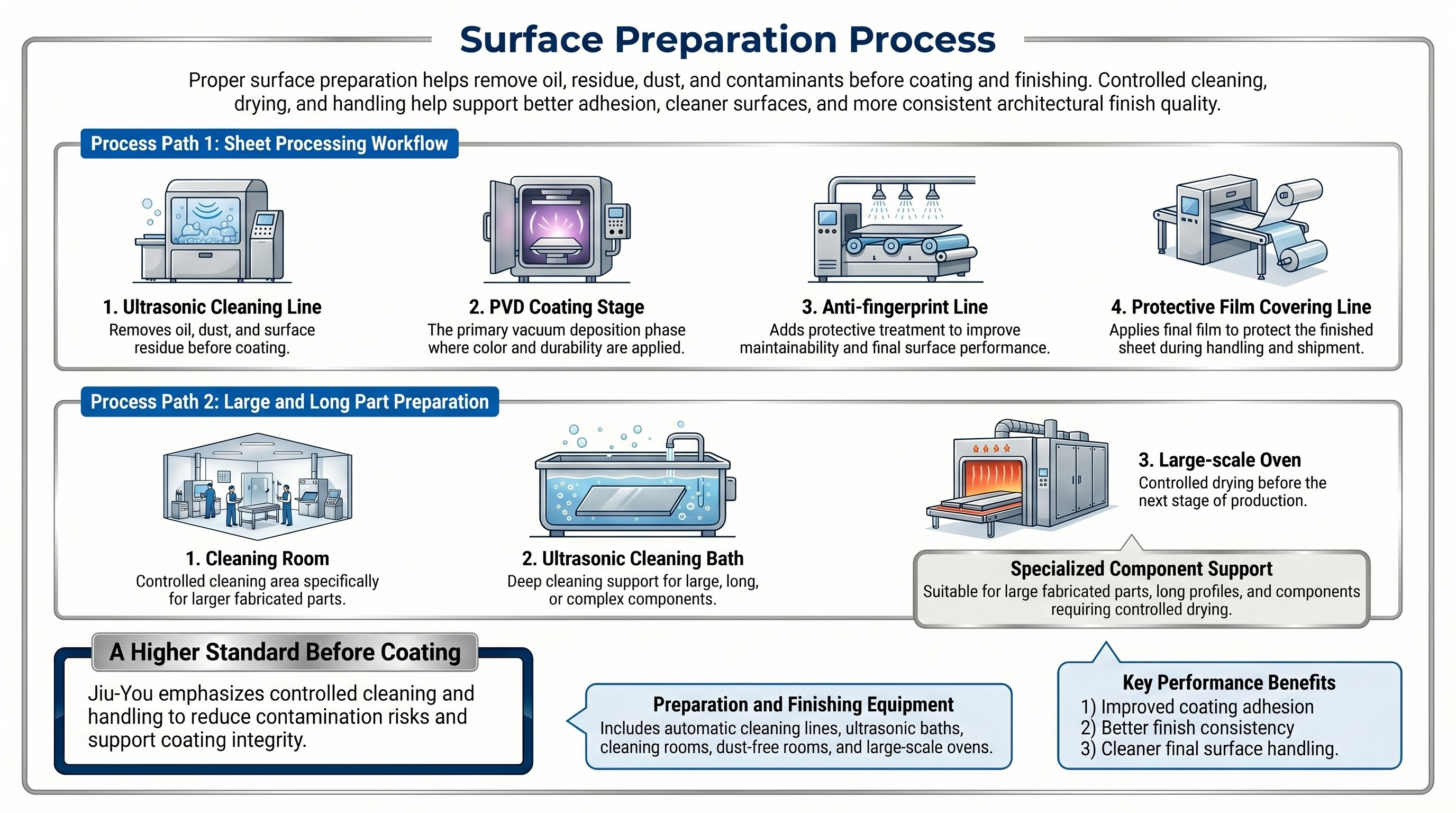
Strong PVD adhesion starts with proper surface preparation. At Jiu-You Metal Tech, we use dedicated cleaning equipment and controlled cleaning areas to help remove oil, residue, dust, and other surface contaminants before further processing. This helps support stronger coating adhesion, more consistent finish quality, and a cleaner final surface.
Our surface preparation capabilities include an automatic cleaning line, ultrasonic cleaning equipment, dedicated cleaning rooms, and a dust-free room for controlled handling. We also use large-scale drying equipment to help ensure surfaces are properly prepared before moving to the next stage of production. Together, these systems help support the coating integrity and finish consistency required for high-quality architectural and decorative metal applications.
Surface Preperation Workflow
Cleaning-Related Surface Defect
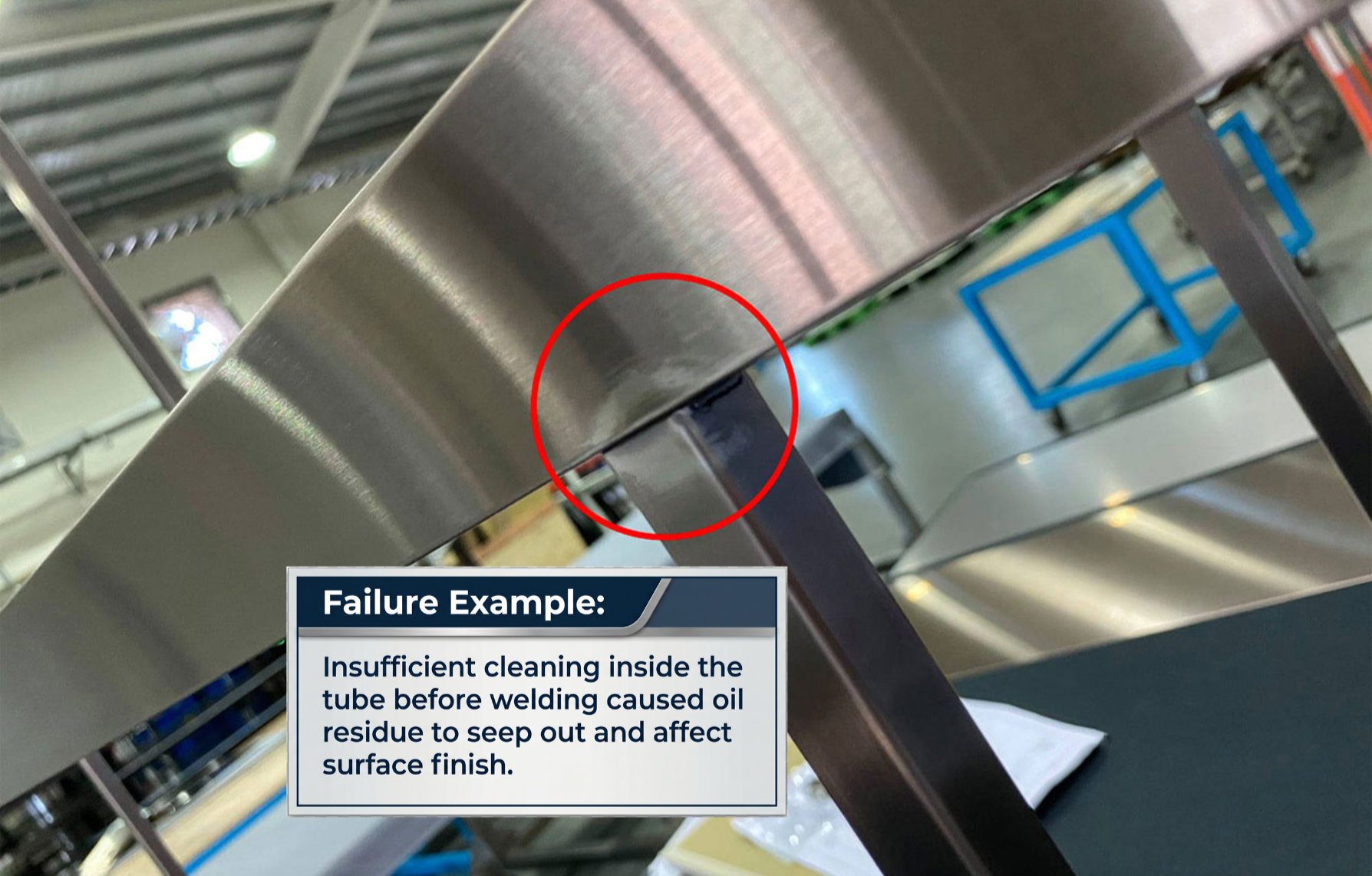
The picture below shows a surface defect caused by insufficient cleaning before welding. Residual oil or other contaminants inside the tube were able to seep out during processing and affect the final surface finish. This example highlights why proper cleaning and surface preparation are critical to coating quality and finish consistency.
Key Factors in Coating Adhesion
1. Thorough cleaning is the first step in improving coating adhesion. If oil, residue, or other contaminants remain on the base material, the coating cannot make full contact with the surface, which can reduce adhesion and overall finish quality. Ultrasonic cleaning is one of the most effective preparation methods.
2. Proper substrate temperature can help improve adhesion during coating. Raising the temperature of the base material can promote better bonding between the coating and the surface, helping the film adhere more effectively.
3. An intermediate layer of can improve adhesion when direct bonding is difficult. In some applications, a thin transition layer is added between the coating and the base material to help create a stronger bond.
4. The PVD technique, sputtering, can provide stronger adhesion than conventional vapor deposition because it uses high-energy particles to deposit a thin metal layer onto the surface. This can help improve coating adhesion, as sputtered particles are able to bond more effectively to the surface and contribute to better coating performance.