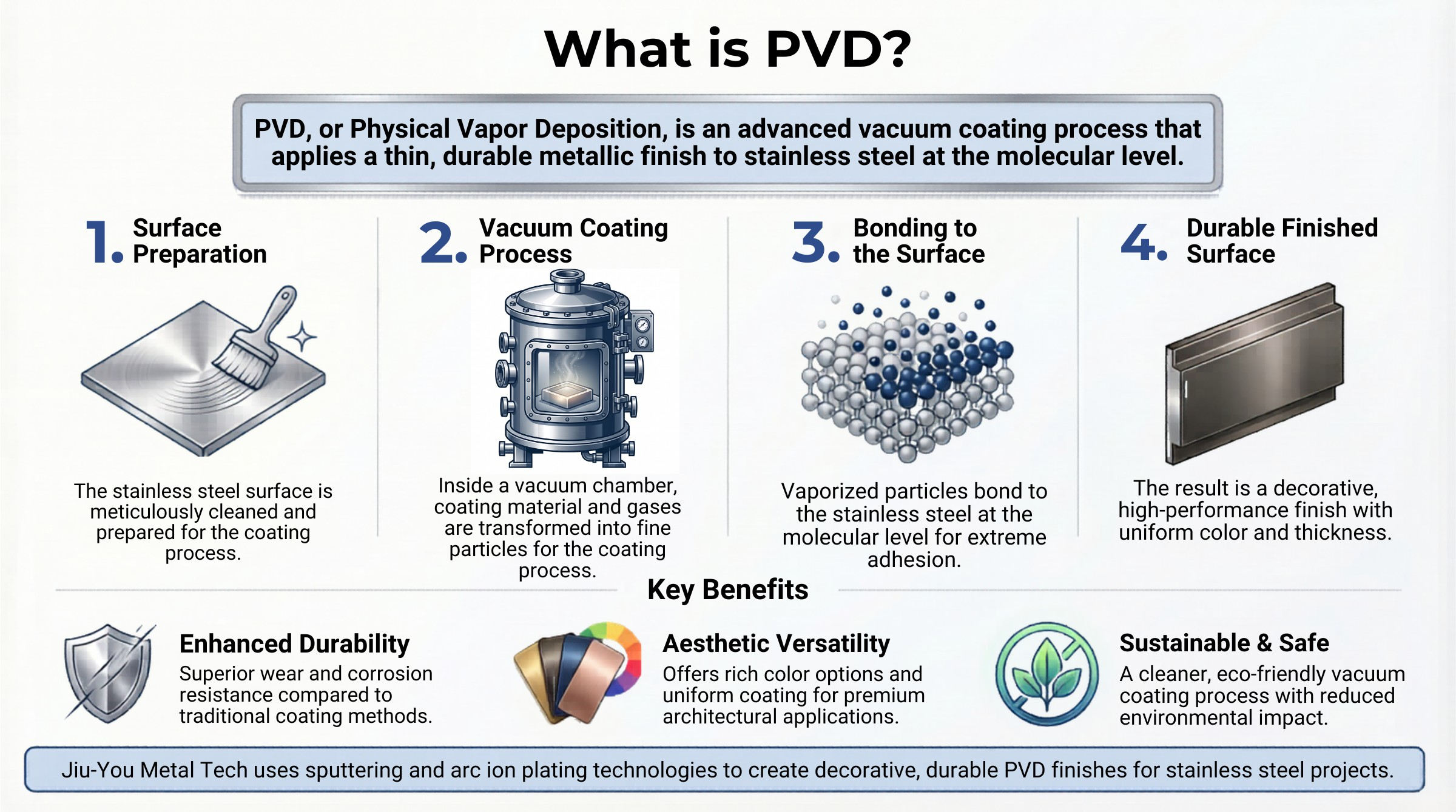
What is PVD Coating?
How PVD Works
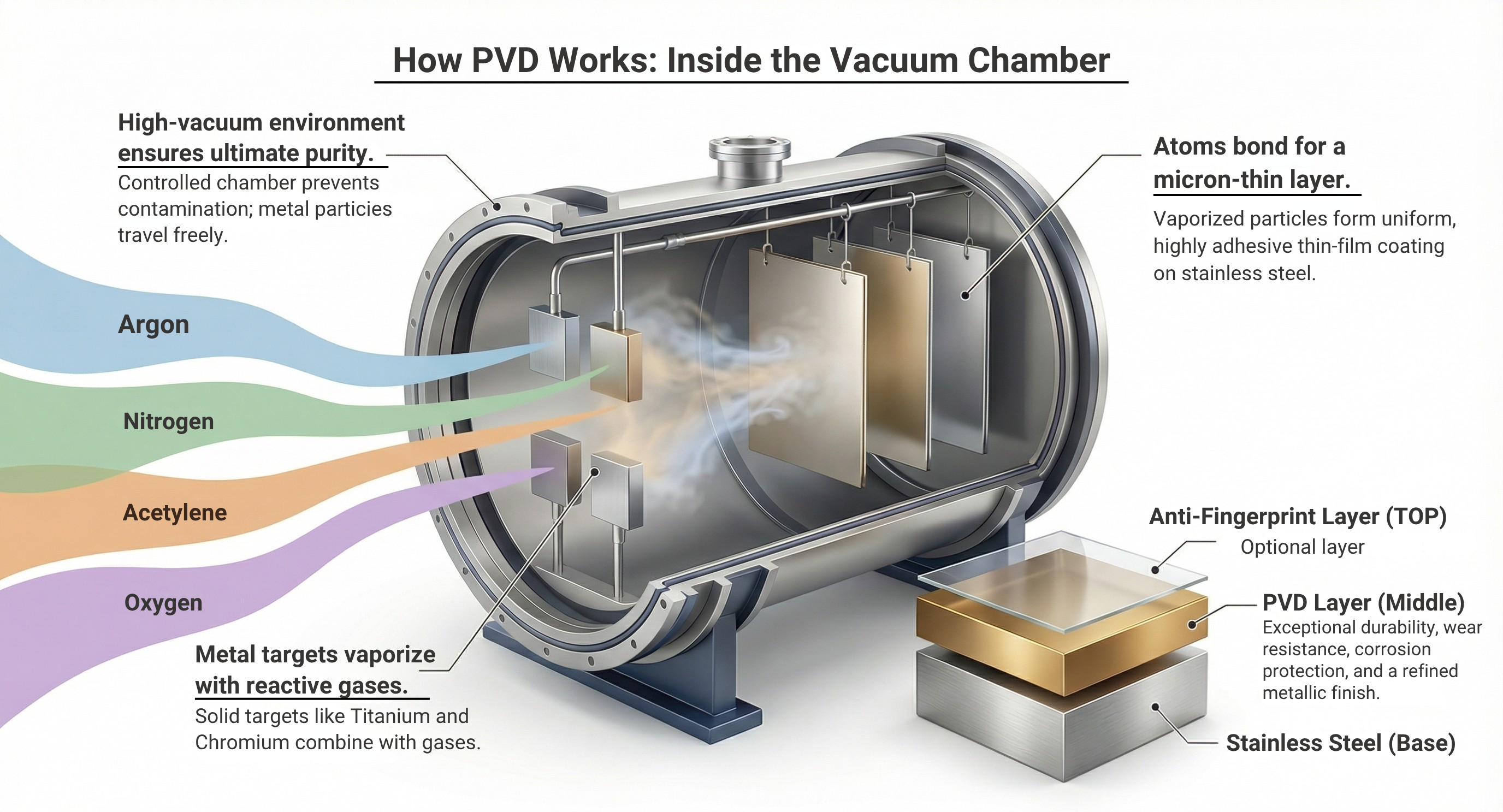
PVD coating takes place inside a vacuum chamber using solid metal targets such as titanium, zirconium, chromium, and aluminum. These target materials are energized by processes such as arc ion plating or sputtering, releasing metal particles that move through the chamber toward the stainless steel surface. At the same time, process gases such as argon, nitrogen, oxygen, and acetylene are introduced to help create different coating compositions, colors, and surface properties. The particles then condense and bond to the surface at the molecular level, forming a thin, uniform, and highly durable coating.
Benefits of PVD
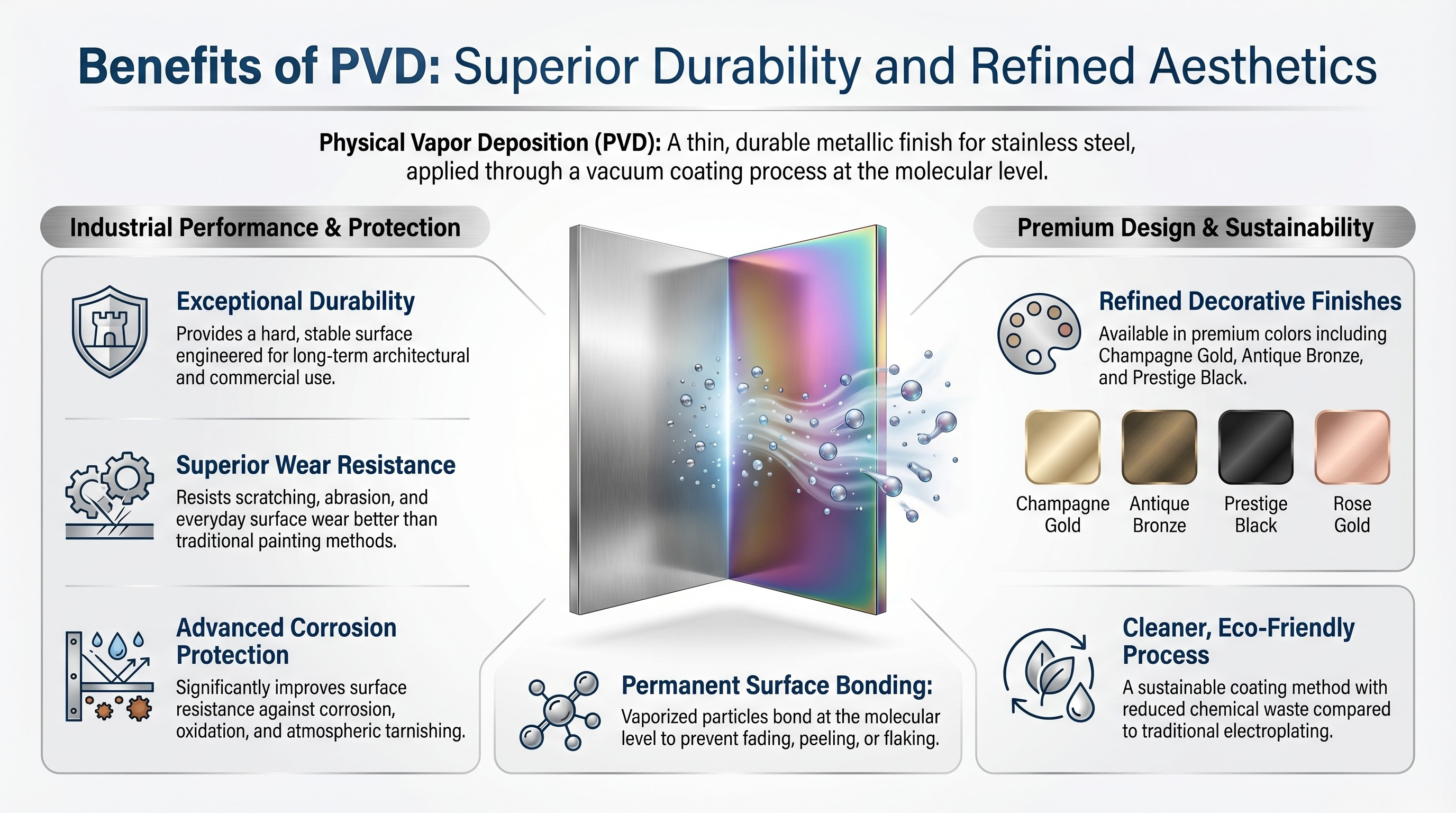
PVD provides exceptional durability, strong wear and corrosion resistance, and long lasting decorative color. It can produce a wide range of premium metallic finishes, such as Champagne Gold, Antique Bronze, Prestige Black, and Rose Gold, while delivering a hard, stable surface that resists fading, peeling, and flaking. Compared with traditional electroplating and chemical painting methods, PVD is a cleaner, more environmentally friendly coating process with reduced chemical waste.